How to Choose Wholesale Sneakers: A Practical Buyer's Guide
Buying sneakers in bulk looks easy until the first container lands. This guide is written for importers, market traders and small chains who source directly from a factory — these are the checks that actually decide whether a style sells through or sits in your stockroom for a season.
1. Start with your market, not the catalogue
Before you compare styles, write down three numbers:
- the retail price band your customers actually pay,
- the climate (hot and humid markets need breathable uppers),
- the dominant foot shape in your market.
A $10 retail shoe in a hot coastal city needs a mesh or canvas upper and a light sole. The same shoe in a colder inland region sells better with a padded collar and a denser outsole. Start from the wearing condition and the catalogue becomes far easier to filter.
2. Sole material decides the price band
The sole is where most of the cost sits, and it is also what customers feel first.
| Sole type | Feel | Typical use | What to watch |
|---|---|---|---|
| PVC | Firm, heavier, cheapest | Entry-level everyday shoes | Gets stiff in cold weather |
| TPR | Flexible, good grip | Mid-range casual and skate | Check abrasion on rough ground |
| MD (EVA midsole) | Light, cushioned | Running-style and thick-sole looks | Compression after long wear |
| Rubber | Heavy, most durable | Work and outdoor styles | Weight and freight cost |
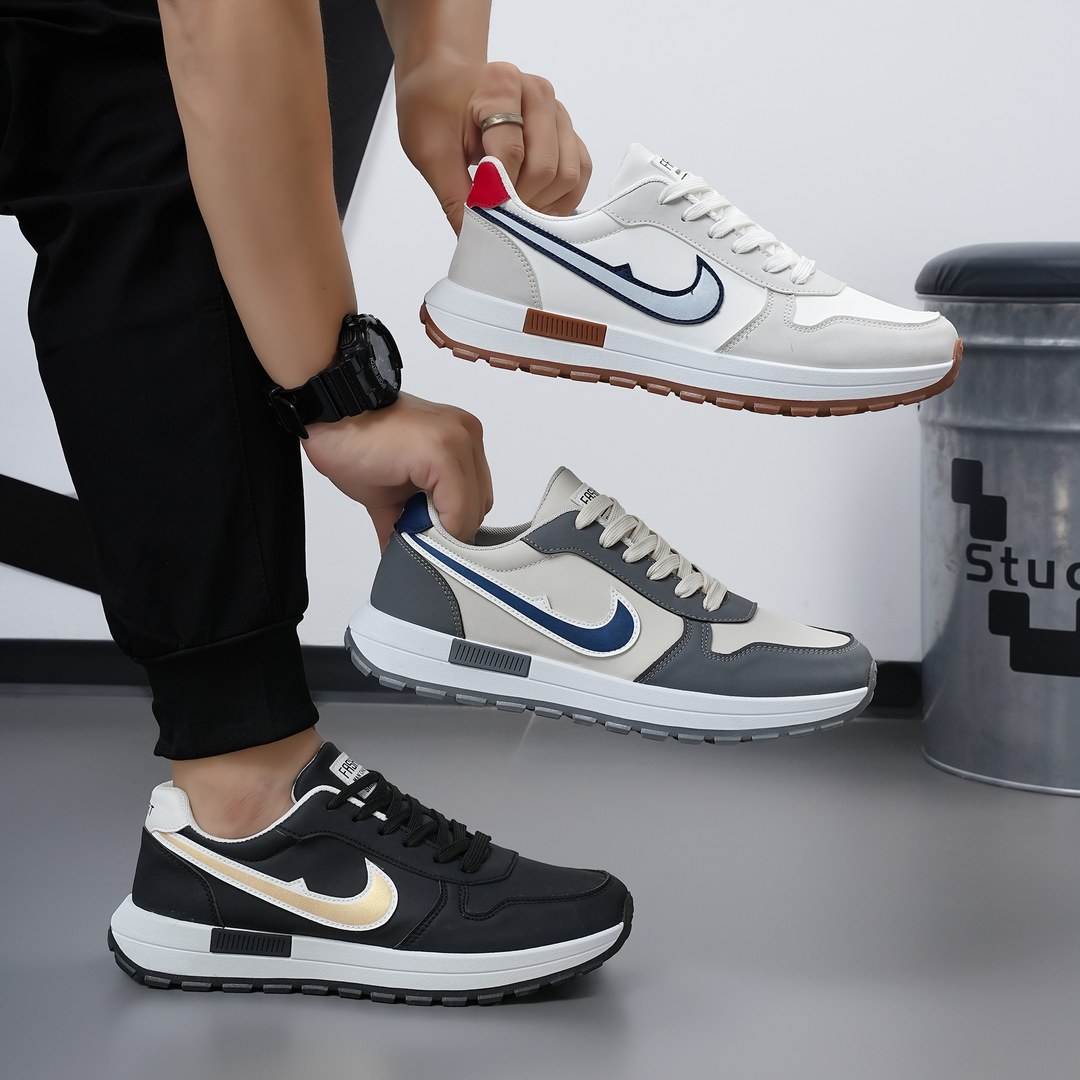
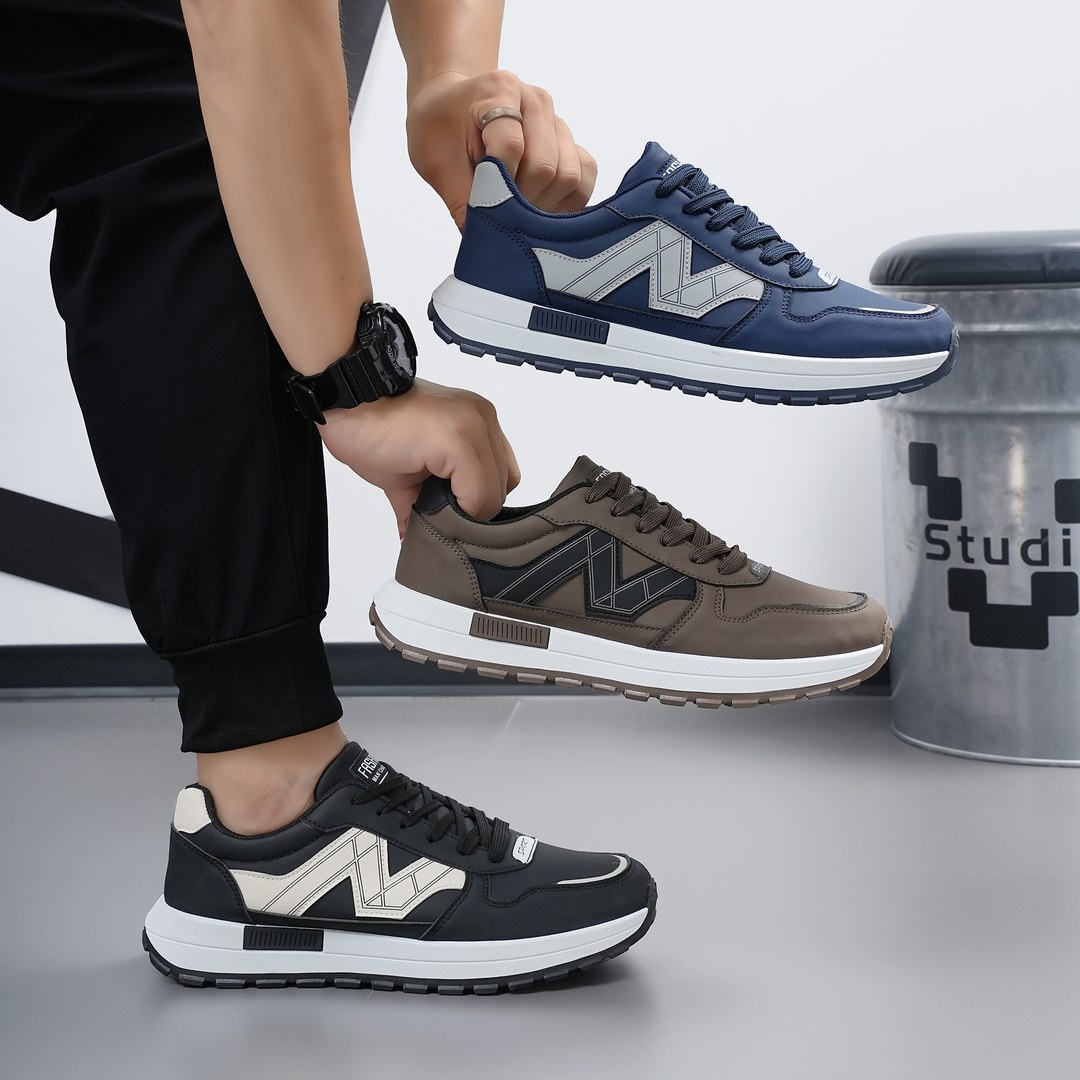
Thick-sole ("dad shoe") styles sell well right now — see our thick sole skate shoes — but they add volume, which raises your freight per pair. Always compare landed cost, not unit price.
3. Uppers: canvas, PU or mesh
- Canvas — breathable, cheap, prints and embroidery take well. Weak point: it creases and stains easily.
- PU (synthetic leather) — looks closer to leather, wipes clean, holds shape. Weak point: hot climates, and it can crack after a year if the grade is low.
- Mesh / flyknit — lightest and coolest, the default for running looks. Weak point: it snags, and stitching quality matters far more than with canvas.
Ask the factory for the upper material in writing, and ask for the same material on the sample you approve and the bulk shipment you receive. Material substitution between sample and bulk is the single most common complaint in this price range.
4. Sizing and last shape
"EU 42" does not mean the same shoe in every factory. Two things matter:
- The last (the foot form the shoe is built on). A narrow last on a wide-footed market means returns.
- Whether the size is true to the label. Always measure the insole length of the sample in centimetres and compare it with your own best-selling shoe.
If your market runs wider, either choose a wider style or buy one size up in the ratio — do not simply stretch the size range.
5. MOQ, mixed colours and mixed sizes
Most factories in this range work per style, with a minimum per colour. Two practical tips:
- Mix colours, not styles, on the first order. One style in four colours tests the market with far less risk than four styles in one colour.
- Ask for a mixed-size ratio, not equal quantities. Equal quantities per size is the fastest way to end up with a pile of the smallest and largest sizes. See our size and ratio guide for the ratios we ship most often.
6. QC checklist before shipment
Run this on the actual shipment, not only on the approval sample:
- Sole bonding: pull at the toe and heel by hand, look for any gap.
- Pair matching: same colour tone, same height, same lacing.
- Stitching: no skipped stitches at the stress points (where the upper meets the sole at the toe).
- Insole printing and size label: matches the carton and the order.
- Carton count and size breakdown: matches the packing list.
A 2% defect rate is normal in this price band and should be agreed in advance. What you should not accept is a defect that is systematic — the same problem on every pair — because that means the production run, not luck.
7. The mistakes that cost the most
- Buying on photos alone. Always get a sample in hand before a container order.
- Ignoring freight volume. A bulky sole can cost more to ship than to make.
- Ordering equal size quantities.
- Skipping the written spec. "Same as sample" in a chat is not a spec.
If you want to check what is available right now, browse the full catalogue or send us the style number you like on WhatsApp — we will confirm price, colours and the earliest shipment.
Quick questions we get asked
Can I mix styles in one carton? Usually yes for the same style in different colours or sizes. Mixing different styles in one carton depends on the order size — ask before you plan your container.
How long does production take? For repeat styles, a few weeks; for a first order with your own colourway, longer because the material has to be ordered in.
Do you ship by sea or by air? Both. Sea for full containers, air or express for samples and small urgent top-ups.